The Best Time to Visit Jeju Island

The best time to visit Jeju Island is late April into May, or October: two windows when the temperatures sit comfortably mild and the heaviest rain of the year has either not started or has already cleared. I have guided groups through every month on this island, including the wet middle of summer, and the difference a well-chosen month makes to how much you actually enjoy a day outdoors is bigger than most guides will tell you honestly. This page runs the real Korea Meteorological Administration numbers for every month, then the season-by-season case, the rainy stretch and typhoon season explained plainly, and where you land depends on what you came here for.
Quick answer
Late April through May and October are Jeju's best windows: mild temperatures, clearer skies than midsummer, and rainfall well below the June-to-September peak. Avoid the jangma rainy stretch in late June and July, and go into typhoon season, July through October, with flexible dates rather than a single fixed day.
Key takeaways
- Late April to May and October are the two clearest, mildest windows, with rainfall far lower than the June-September stretch
- August is both the hottest and the wettest month of the year on the Korea Meteorological Administration's own normals
- The jangma rainy season runs a normal window of 19 June to 20 July, and the agency does not forecast the exact dates in advance for any given year
- Typhoon season runs July through October; a cancelled inbound flight is what usually ruins a Jeju trip, not the weather once you've landed
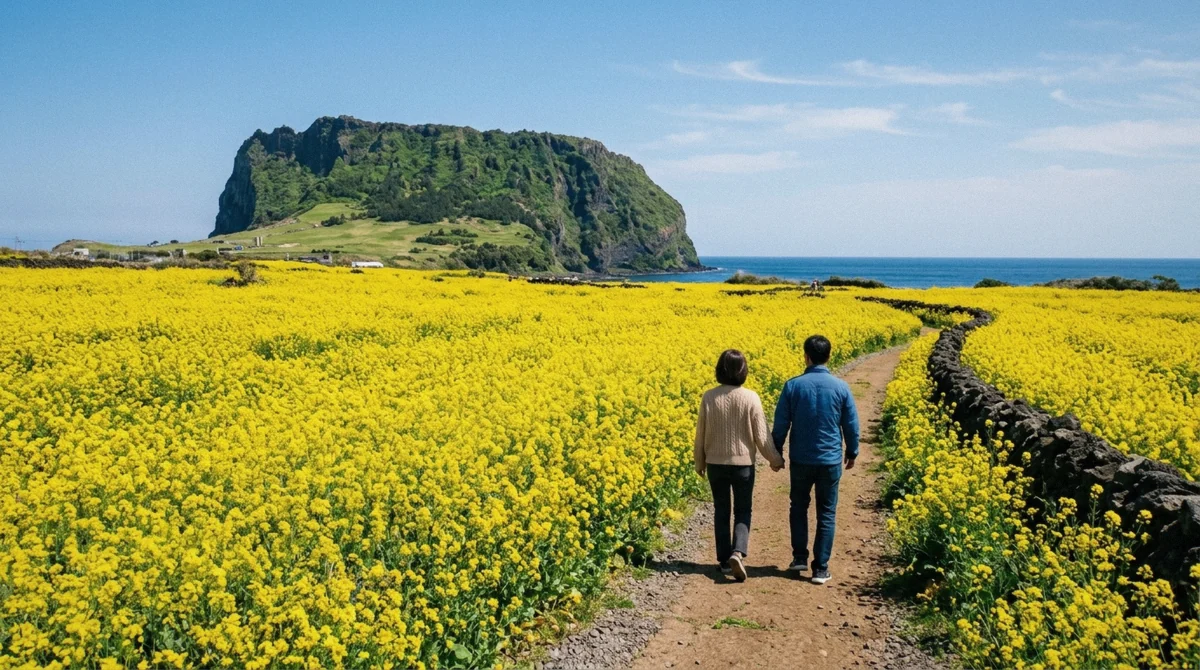
- Cherry blossom typically peaks in the first half of April, overlapping with the canola bloom, see the three-day itinerary for how to build a spring trip around it
- Guided full days on this site start at $30 per person and run through every season, see the guided options here
Tours That Run Well in the Recommended Months
These are the departures I'd point a spring or autumn visitor toward first, though every one of them runs year-round.
 from $30Bestseller · 4.9★ (1,916 reviews)
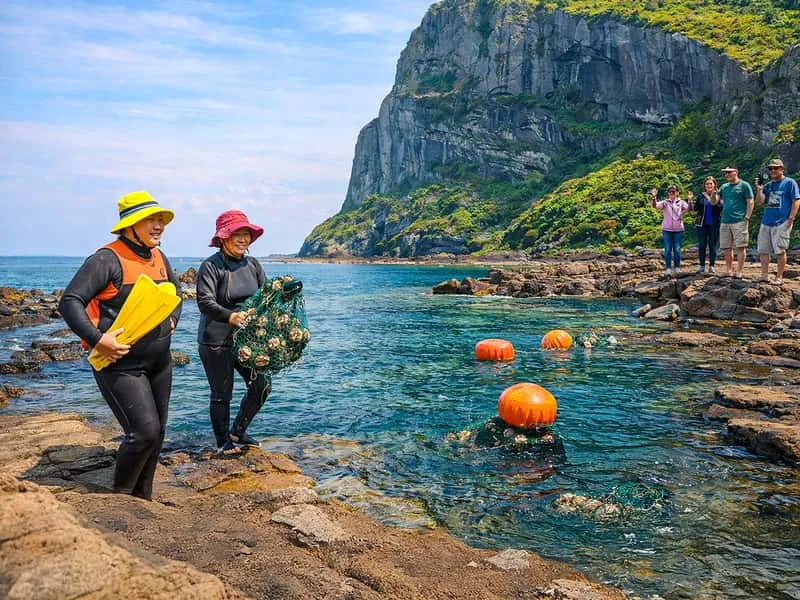
 East Jeju UNESCO Day Tour: Seongsan, Haenyeo Show & Lava Tube
Explore the UNESCO wonders of eastern and northern Jeju in a single day — sunrise-peak views at Seongsan Ilchulbong, a walk inside a volcanic lava tube, and a…
- Climb Seongsan Ilchulbong (Sunrise Peak), a UNESCO tuff cone rising from the sea
- Step inside an ancient volcanic lava tube on the island's east coast
- Watch a live Haenyeo show by Jeju's UNESCO-listed women free-divers
- Full day of eastern and northern Jeju history, culture and coastal nature
 from $30No forced shopping stops · 4.9★
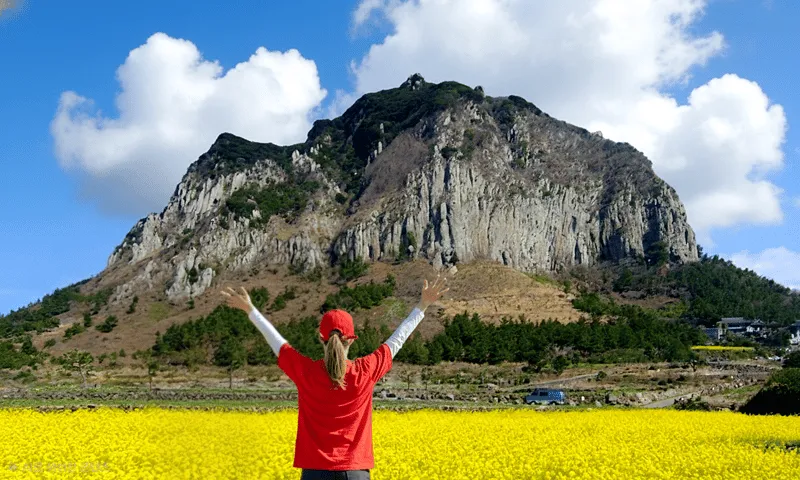
 South-West Jeju Essentials: Hallasan & UNESCO Highlights
A thoughtfully paced tour of south-western Jeju for first-time visitors, combining the island's must-see UNESCO highlights and the foothills of Hallasan with expert local guides, a relaxed rhythm…
- Explore south-western Jeju's UNESCO highlights at a relaxed pace
- Take in the volcanic foothills of Mt. Hallasan
- Travel with expert English-speaking local guides
- No forced shopping stops — just the sights that matter
 from $304.8★ (1,267 reviews)
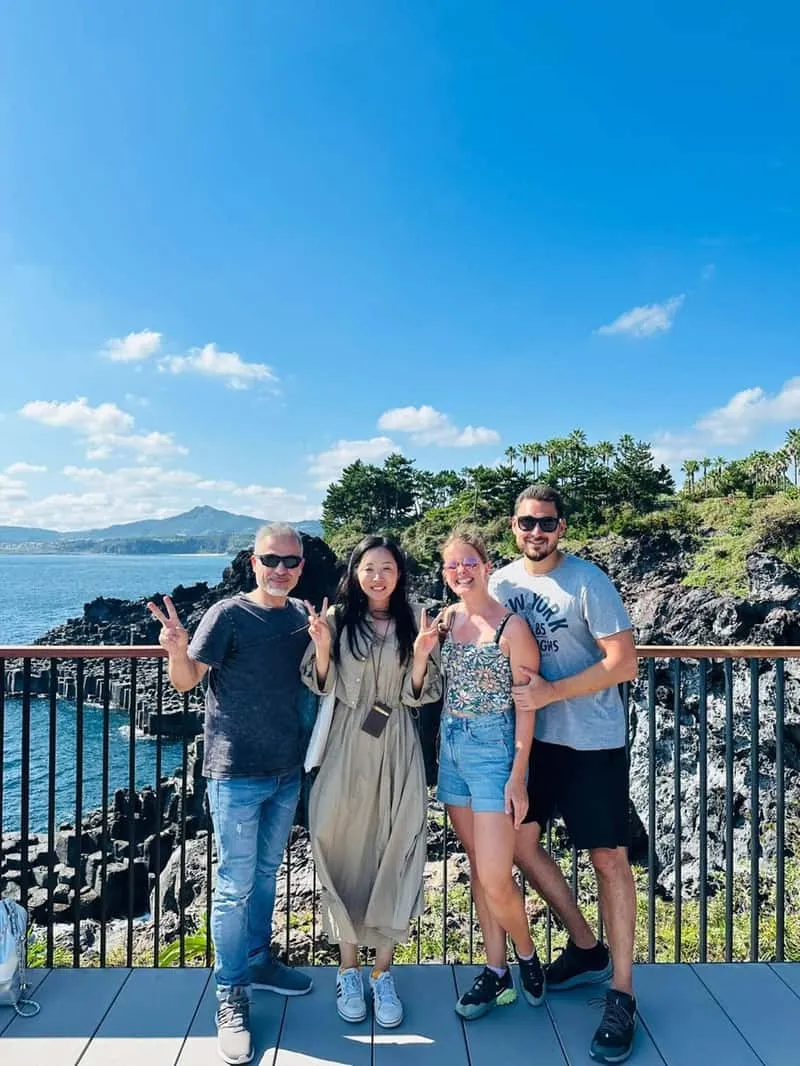
 West & South Jeju Sightseeing Day Tour
Travel across Jeju's diverse western and southern landscape in one day — the slopes of Mt. Hallasan, the hexagonal Jusangjeolli lava cliffs, cascading waterfalls and the peaceful Bomunsa…
- See the volcanic slopes of Mt. Hallasan, Korea's highest mountain
- Marvel at the hexagonal Jusangjeolli lava cliffs on the south coast
- Visit Jeju's scenic waterfalls and the tranquil Bomunsa temple
- A balanced day across the island's western and southern highlights
The Short Answer, Month by Month
These figures come from the Korea Meteorological Administration's 1991-2020 climate normals for the Jeju City station, the same official baseline Korean forecasters use. Celsius first, Fahrenheit in brackets.
| Month | Average high | Rainfall | What it is like |
|---|---|---|---|
| January | 8.6°C (47.5°F) | 67.5 mm | Cold for Jeju standards, occasional snow on Hallasan, quiet with the tangerine harvest still going |
| February | 9.9°C (49.8°F) | 57.2 mm | The driest of the winter months, still cool but noticeably brighter than January |
| March | 13.3°C (55.9°F) | 90.6 mm | Transitional month; early bloom can start toward the end for a mild year |
| April | 18.0°C (64.4°F) | 89.7 mm | Cherry blossom and canola season, mild days, one of the two recommended windows |
| May | 22.1°C (71.8°F) | 95.6 mm | Warm, still comfortable, rain climbing but not yet heavy; the tail of the recommended spring window |
| June | 24.9°C (76.8°F) | 171.2 mm | The jangma rainy season begins partway through the month |
| July | 29.3°C (84.7°F) | 210.2 mm | Hot and humid, jangma tapering, typhoon season opening |
| August | 30.1°C (86.2°F) | 272.3 mm | The hottest and wettest month of the year; peak sea temperature but also peak typhoon risk |
| September | 26.1°C (79.0°F) | 227.8 mm | Still warm, typhoon season active, rainfall staying high |
| October | 21.6°C (70.9°F) | 95.1 mm | Clear air, comfortable temperatures, rain dropping sharply; the other recommended window |
| November | 16.4°C (61.5°F) | 69.5 mm | The driest month of the year, cooling fast, tangerine harvest underway |
| December | 11.0°C (51.8°F) | 55.6 mm | Cold and quiet, occasional snow at higher elevation |
Annual rainfall across the year averages about 1,452 mm, and by these normals August stands alone as both the hottest month, at an average high of 30.1°C (86.2°F), and the wettest, at 272.3 mm. November is the driest month of the year. Seogwipo, on the island's south side, runs a shade milder in winter and generally wetter than Jeju City across the year, though we don't have a separate station table for it here.
Source: Korea Meteorological Administration 1991-2020 normals, at an exchange rate of roughly ₩1,415 to the US dollar checked in August 2026 for any prices quoted on this page (Last verified: August 2026); check the current forecast close to your travel dates rather than relying on a seasonal average alone.
Season by Season on Jeju
Zooming out from the twelve-month table, here is how the four seasons compare at a glance before the detail below.
| Season | Typical high | Rain signal | Best for |
|---|---|---|---|
| Spring (Mar-May) | 13.3-22.1°C (55.9-71.8°F) | Moderate, climbing through May | Cherry blossom, canola, mild first-time trips |
| Summer (Jun-Aug) | 24.9-30.1°C (76.8-86.2°F) | Heavy, peaking in August | Warm sea temperatures, lush scenery, flexible dates |
| Autumn (Sep-Nov) | 16.4-26.1°C (61.5-79.0°F) | Dropping sharply after September | Clear air in October, tangerine harvest in November |
| Winter (Dec-Feb) | 8.6-11.0°C (47.5-51.8°F) | Low, driest stretch of the year | Quiet coastal sights, off-season prices |
Spring (March to May): Bloom and Mild Air
This is the window most first-time visitors picture when they imagine Jeju: cherry blossom opening in late March and peaking in the first half of April, the canola fields following close behind, and average highs climbing comfortably from 13.3°C (55.9°F) in March to 22.1°C (71.8°F) by May. Rainfall stays moderate through the season rather than heavy. The trade-off is that bloom timing moves with the winter each year and is only announced with real confidence a few weeks ahead, so book flexibly around the general window rather than a single guaranteed date.
Summer (June to August): Heat, Green and the Wet Middle
Summer brings the warmest sea temperatures of the year, peaking around 26 to 27°C in mid-August, and the island turns lush and green. It also brings the jangma rainy stretch in late June into July and the start of typhoon season, plus August standing as the single hottest and wettest month on the KMA table. I still guide plenty of happy summer visitors, particularly around the east Jeju UNESCO day tour, but I tell them honestly to build a spare morning into the schedule rather than book every single day back to back.
Autumn (September to November): Clearing Skies
September still carries real typhoon risk and stays warm and rainy, but by October the air clears sharply, average highs settle at a comfortable 21.6°C (70.9°F), and rainfall drops to roughly a third of August's total. This is the other window I recommend without hesitation. November turns cooler and is the driest month on record, with the tangerine harvest running through it, a genuinely pleasant, quieter stretch for visitors who don't mind a light jacket.
Winter (December to February): Cold, Quiet, Clear
Winter is Jeju's off-season, with average highs from 8.6°C (47.5°F) in January up to 9.9°C (49.8°F) in February, and it's genuinely cold enough for occasional snow on Hallasan's upper slopes; a winter summit attempt needs real planning, covered on hiking Hallasan. Rainfall is comparatively low through the whole season, and the bus network on getting around Jeju without a car runs its normal schedule year-round, winter included. It's my personal favorite time to guide a quiet UNESCO day, precisely because the coastal sights are near-empty, but it is not the season for a beach trip or a summit hike without real cold-weather gear.
The Rainy Season and the Typhoons, Without the Scare Stories
Jangma, Korea's rainy season, has a Korea Meteorological Administration 1991-2020 normal window of 19 June to 20 July for Jeju specifically. Inside that stretch you should expect genuinely wet, humid days more often than not. What I want to be clear about: the agency does not forecast the exact jangma dates for a future year in advance; any specific start or end date you see quoted online for a year that hasn't happened yet is someone's projection, not an official forecast.
Plan around the normal window, then check the live forecast as your dates approach.
Typhoon season runs July to October, and roughly three typhoons a year affect the Korean Peninsula on the agency's long-run average, with Jeju sitting first in their path and taking warnings the mainland doesn't. In practice, the thing that actually derails most visitors' Jeju trips isn't the weather on the ground once you've landed, it's a cancelled inbound flight or ferry before a storm arrives. I never promise a refund policy on an operator's behalf here; tours cancel for weather when conditions require it, and the cancellation terms shown at checkout are the ones that apply.
If a storm does clip your dates, the east Jeju UNESCO day tour and the west and south Jeju day tour both give you a full alternate day to shift to rather than losing the trip entirely.
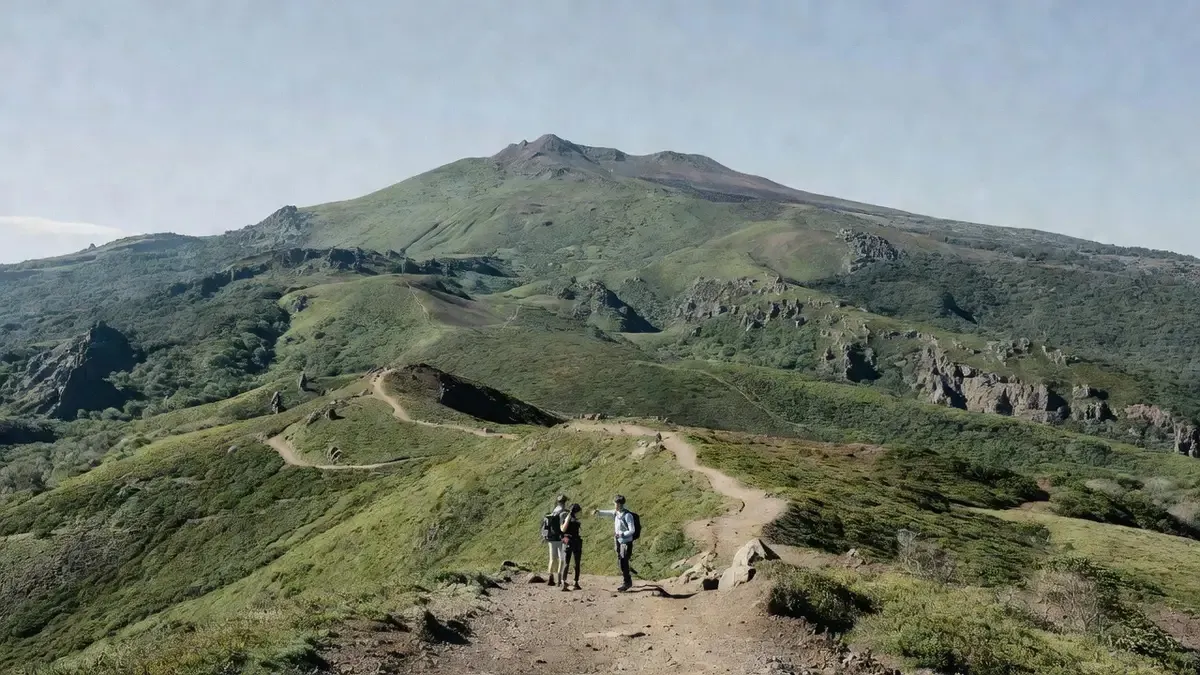
Cherry Blossom, Canola and Tangerines: What Blooms When
Jeju blossoms earlier than anywhere else in Korea, typically opening in late March and peaking in the first half of April, which is why spring visitors often plan their whole trip around a narrow window. Canola, known locally as yuchae, overlaps with the tail of cherry blossom season in early April; the Seogwipo Canola Flower Festival ran 4-5 April in 2026, though the exact peak bloom for a given year is only confirmed a few weeks out, so treat any specific date as a target rather than a guarantee and check closer to your trip.
Tangerines run the opposite calendar: the harvest and the sweetest fruit come through November into January, which makes late autumn and early winter Jeju's quieter, citrus-scented season rather than its floral one. If a garden or market visit built around fresh hallabong tangerines matters to your trip, that's the window to target, not spring. I get asked constantly whether it's possible to catch both blossom and a summer beach day on one trip, and the honest answer is no, not on the same visit; the two seasons sit months apart on the calendar, so pick the one that matters more to you and plan the trip around it rather than trying to split the difference.
One more seasonal note worth knowing: sea temperature around Jeju peaks at roughly 26 to 27°C in mid-August, dropping to around 22°C by autumn, which is why the official municipal swimming season at the main beaches runs roughly 24 June to 31 August. Outside that window the water is swimmable for the determined, but the beaches themselves quiet down noticeably once the official season closes, which some visitors actually prefer if a crowded beach isn't the point of their trip.
Choosing Your Month by What You Came For
If you want cherry blossom and canola fields
aim for late March into the first half of April, and check the bloom forecast a few weeks ahead rather than booking a single fixed date
If you want the clearest, mildest weather with the least rain risk
go in October, the strongest all-round month on the KMA table
If you're set on a summer beach trip and can tolerate heat and humidity
go in August for the warmest sea, but build a spare morning into your schedule for the jangma tail and typhoon risk
If you want a quiet, uncrowded coastal visit and don't mind the cold
go in December or January, when the sights are close to empty
If you want fresh tangerines and a mellow off-peak trip
go in November, the driest month of the year and the start of the citrus harvest
Frequently Asked Questions
What is the best month to visit Jeju Island?
October is the single strongest all-round month on the Korea Meteorological Administration's normals: mild at 21.6°C (70.9°F) average high, with rainfall a fraction of the August peak. Late April to May is a close second, timed around cherry blossom and canola.
Is Jeju good to visit during typhoon season?
Typhoon season, July through October, doesn't rule out a trip, but travel with flexible dates. The real risk is a cancelled inbound flight or ferry before a storm, not the conditions on the ground on an average day within the season.
When does the rainy season start in Jeju?
The Korea Meteorological Administration's 1991-2020 normal window for jangma on Jeju is 19 June to 20 July, though the agency does not forecast the exact dates for a future year in advance.
When do the cherry blossoms bloom in Jeju?
Typically opening in late March and peaking in the first half of April, earlier than anywhere else in Korea. The exact peak moves with the winter each year and is confirmed only a few weeks ahead.
Is Jeju too cold to visit in winter?
It's genuinely cold by Jeju standards, average highs around 8.6-9.9°C (47.5-49.8°F) in January and February, with occasional snow on Hallasan's upper slopes, but the coastal sights stay open and are far quieter than in peak season.
What is the hottest and wettest month in Jeju?
August, on the Korea Meteorological Administration's own normals: an average high of 30.1°C (86.2°F) alongside 272.3 mm of rainfall, the highest of any month.
So, When Should You Go?
Late April into May, and October, are where I send most first-time visitors, in that order depending on whether bloom season or clear autumn air matters more to your trip. If your dates are already fixed for a month outside those two windows, that's genuinely fine; every season here has a real case, from winter's quiet coastline to summer's warm sea, as long as you go in with honest expectations about the rain and, if you're traveling July through October, some flexibility around your flights.